Tuesday, December 15, 2015

Why You Should Consider Visiting an Oral Surgeon

Many people consider oral surgery to be a drastic step and are often alarmed when their dentist suggests that they need to meet with and get treated by an oral surgeon. The reality is, there are numerous issues that cannot be dealt with by your regular dentist. When you have a condition like TMJ, impacted teeth, facial pain, or any number of other problems, you will need to get oral surgery. Oral surgeons even treat things like tumors from oral cancer and can also perform cosmetic facial surgery to improve the appearance of your smile. With the wide range of conditions that are corrected with oral surgery, you should not be alarmed or concerned if your dentist wants to refer you to an oral surgeon to deal with a particular issue.

Oral surgery is often a confusing term for patients, who look at everything in layman’s terms. For example, what is the difference between getting a root canal and having to remove your impacted wisdom teeth, other than the fact that one is done by your dentist and the other requires the services of an oral surgeon? This is exactly the same as in medicine when some simple procedures can be done by your general practice doctor, while other procedures need to be dealt with by a surgeon. The most common oral surgery procedures are removing impacted teeth and getting dental implants placed.

Impacted wisdom teeth are one of the most common problems that adults across the country have to deal with. Impacted wisdom teeth have to be removed using oral surgery. For most adults, their wisdom teeth appear much later than the other teeth. Since these are the third molars, there has to be enough room in the mouth and the jaw to allow the teeth to come in. Unfortunately, most times, the teeth do not have the room to come in straight or completely out of the gum. This is considered impacted and can have a significant and damaging effect on the teeth around the impacted wisdom tooth. Oral surgery can remove the teeth, preventing damage to the surrounding teeth and often relieving pain and swelling.

Another common reason for getting oral surgery is to replace lost or badly damaged teeth with dental implants. Dental implants are an excellent alternative to dentures or bridges for people who have lost their teeth. A tiny titanium screw is placed into the jawbone to act as the support for a fake tooth that is placed above the gum line. The new fake tooth is called a dental crown. Dental implants are extremely successful, very permanent, and last a very long time, but they do require oral surgery to place since they are surgically inserted into the jawbone. Often, people who have suffered bone loss in their jaw must have the bone replaced or augmented with oral surgery.

An oral surgeon is trained and skilled in the use of anesthesia to help make any procedure you get comfortable and as painless as possible.

Tuesday, December 1, 2015

Tips for Gum Recession Prevention

Gum recession can affect any person, even someone who has a healthy mouth. According to many studies, approximately 50 percent of people have some form of gum recession. Once you develop gum recession, it can be hard to combat, but it is not impossible. To avoid the extra hassle and dental costs, try these tips to prevent gum recession altogether.

Gum Recession Definition and Causes

Gum recession typically occurs after a person has had gum disease, which is the infection and inflammation of the gum line. It is a side effect of the gums fighting off infection and growing weaker. Because of the stress, the tissues gradually break down. Gum recession can also occur simply due to congenital causes like thin, fragile gums, which is why so many people with healthy teeth and gums experience it. You also risk developing gum recession if you brush your teeth too vigorously daily. The persistent pressure on your gum line can cause it to recede. Crowded teeth and small jawbones are a few other causes of gum recession, in addition to many others. When gum recession occurs, the gingival margin (gum line) will gradually move away from the crown of the tooth, eventually exposing roots, causing discomfort, and leading to tooth loss.

Gum Recession Prevention

Brushing and Flossing

The best way to prevent gum recession is to keep up with proper oral hygiene practices. You should brush and floss daily. Brush your teeth at least twice every day, but more brushing, like after meals, is encouraged. You should floss once a day to keep food particles and bacteria from getting wedged into your gum line. Mouthwash can also be used daily after brushing and flossing to kill extra bacteria. These practices will help prevent gum disease that could lead to gum recession.

Regular Dentist Visits

Visiting the dentist regularly is also a great way to prevent gum recession. A dentist will be able to tell if you could be experiencing the early signs of gum disease or gum recession. They will be able to treat these conditions to prevent them from developing further. A dentist can also keep your teeth as clean as possible, so the likelihood of developing gum disease and recession is lessened.

Braces

Since crowded teeth can lead to gum recession, going through braces treatment could straighten your teeth and prevent recession from occurring. Braces can also make your teeth generally easier to clean, which leads to a healthier mouth overall.

Tips on Brushing

If you brush your teeth too aggressively, gum recession is inevitable. Try brushing your teeth with a firm but gentle circular motion to clean each tooth thoroughly and gently. If you need tips on getting the best clean without harming your gums, talk to a dentist. You should also ask your dentist what type of toothbrush is best for you.

These simple steps could help prevent gum recession. If receding gums are hereditary in your family, talk to your dentist about others ways you could keep your teeth and gums healthy and strong. We can fill you in on everything you should know about the causes and treatment of gum recession.

Monday, November 30, 2015

Oral Surgery: What You Should Know About Extractions

Oral Surgery
One of the most common oral surgery procedures we perform is the removal, or extraction, of wisdom teeth. Wisdom teeth tend to grow at odd angles within the mouth. When they are not straight, wisdom teeth can grow sideways, remaining under the gum and causing all kinds of problems with the other teeth. This is known as the wisdom teeth being impacted, which requires oral surgery to extract. Like all surgery, oral surgery is something we plan for very carefully, making sure you understand all the elements that go into a successful surgery, including after surgical care and how to properly heal. When it comes to oral surgery, we are especially careful given the location of the procedure.

When you have impacted wisdom teeth, we need to perform an oral surgery to remove them. This process is typically done at the dentist office, so you are in a known and comfortable environment. Naturally, there is always the chance your dentist will decide that you need to be moved to a hospital for the oral surgery. Typically, this only happens when there is more than one tooth to be removed, the process could be longer and more complicated than a simple extraction, or if there is a concern about the patient's overall health. One thing to note: if your oral surgeon or dentist finds an active infection in your mouth, they will put off the oral surgery till a different day. This is because we never want to operate in the mouth when there is an active infection and so will prescribe a course of antibiotics to remove the infection before you go in for your oral surgery.

Most oral surgery, including wisdom tooth extractions, are performed under general anesthesia. Local anesthesia can also be used, which numbs the gums and tissue around the tooth. General anesthesia will put you to sleep, meaning you will be unaware of the process, feel absolutely no discomfort, and awake in a slightly groggy state. Because this procedure and any oral surgery done under general anesthesia requires the need to put you to sleep, we will require you to not eat anything for at least 12 hours before the procedure takes place.

For a wisdom tooth extraction, we start the oral surgery by cutting the gum open to reveal the tooth. If there is any connective tissue that is connecting the tooth to the bone, we will remove this first so the tooth is not holding the bone. If there is any bone covering the tooth, or teeth, we will remove that as well, so the extraction path is clear. Finally, we will remove the tooth, cutting it into smaller pieces if necessary for a smooth extraction. After the oral surgery is completed, we will close up the extraction site with self-dissolving stitches. These will eventually dissolve completely.
After any surgery, including oral surgery, you will need to take it easy for a few days. Pain medications can be used in the event you have any discomfort.


  >  

Tuesday, November 3, 2015

Your Gum Health Is Critically Important and a Periodontist Can Keep Gums Healthy

Periodontist
As a periodontist, we can restore your oral health by treating any signs of gum disease. Many people are unaware of how important gum health is to overall health. Your gums are what hold your teeth securely in place, and without them, your teeth could become loose and even fall out. We can help to prevent this and other complications that can arise by gum disease.

If you have not been to the dentist lately, there are several signs of gum disease you should watch for. Most of these you will notice when brushing your teeth. To start, look and see if your teeth appear longer than they used to. If so, this could be a sign of gum recession or your gums pulling away from your tooth structure. You should also look to see if your gums appear red, swollen, or are bleeding when you brush and floss your teeth. These can all be indicators of gum disease, and if you catch the condition early, you may not need a major treatment. However, the longer you let this condition fester, the more discomfort you will feel on a daily basis and the more intensive of a procedure will be necessary to correct the problem.

There are several ways a periodontist can restore your gums, including:
Deep cleaning. Very often, we can treat gum disease by performing a deep cleaning. Since gum disease is typically caused by plaque building up and becoming trapped under the gums, removing the plaque and tartar will remove the irritant and allow your gums to be restored to perfect health. This is the first step in any treatment plan because if the plaque remains, your gums will become unhealthy again.

Laser therapy. We use lasers to treat gum disease and to restore the health of the gums themselves. We can use them to break up the plaque under the gums and as a way to rejuvenate the gums and prompt growth due to gum recession.

Gum grafting. When the gums have receded to the point that your teeth are exposed and potentially becoming loose, major steps are required to correct it. We can do so using a gum graft. This is where tissue is taken from the roof of your mouth or from a donor and sutured to your gums before being pulled back around the teeth. Performing this procedure will help to keep your gums safe after they have receded. We also have a non-invasive method for doing this that does not require sutures or removing tissue from the roof of your mouth. To discuss our innovative solutions, call and schedule a consultation.

To schedule an appointment with a periodontist, call our office today. We are experts at what we do and will examine you before determining what type of procedure you need to ensure excellent gum health. Since we use a variety of treatment methods, you can count on us when you need treatment and want to recover quickly.


  >  

Friday, October 30, 2015

How Dental Implants Can Change Your Life

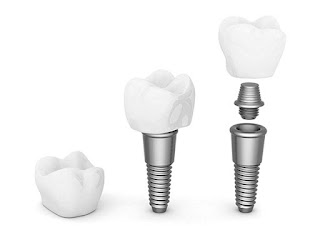
Dental ImplantsIf you have lost some of your teeth, you may not realize what a big difference dental implants can make. For many people, dental implants are life changing. This compilation of three ways dental implants can change your life is just the beginning of the many benefits they can provide.
Dental Implants Help You Stay Young Looking

Dental implants not only improve the necessary function of your teeth, but they can also drastically improve your appearance, making you look years younger. Implants make your smile fuller, filling in drooping areas of your cheeks, jawline, and lips. Once you receive dental implants, you will immediately notice that your facial skin is firmer, and your wrinkles are less noticeable. No matter what your age is, when you lose teeth it tends to make you look a decade older or more because you do not have a strong structure to keep your skin taut, and you develop a sunken appearance in your face. If you go without teeth too long, you may even lose bone structure since there are not teeth in place to keep your jawbone and other teeth from shifting.

Dental Implants Improve Your Chances of Succeeding in Your Career

Your smile is the first thing the majority of people will notice about you and one of the most vivid memories they will hold of your face. If you have less than impressive teeth, it may give off a false impression of your hygiene and happiness. Make a great first impression by receiving quality dental implants that look and feel real while also greatly improving your smile.

People who smile more often give off the impression of being more confident and content in life. When you are trying to succeed in life, it is important to look and feel confident so you can surpass your expectations and other's expectations of you. Allow us to give you more confidence and success by providing you with dental implants that perfectly fill in your already beautiful smile.

Dental Implants Make it Easier to Eat a Healthy Diet

When you are missing teeth, it is often easier to opt for foods that are not challenging to chew, but these foods also tend to have less nutritional value. Not getting proper nutrients can lead to the loss of more teeth, bone loss, weight loss, blood sugar problems, and long-term health risks. When you are ready to enjoy a proper meal again, complete with all the vitamins and minerals necessary to maintain a healthy lifestyle, dental implants can provide you with this power. Dental implants can also help you eat foods that you miss that you may not have been able to eat in years. Eating the foods you love makes life more enjoyable and provides you with a long life.

The procedure to receive dental implants typically only takes two to three visits, and within a few months, you will have strong, working teeth again. The artificial tooth roots that hold your replacement teeth in place are made of a titanium metal that fuses with your jawbone to create the strongest possible substitute for missing teeth. Dental implants can act on their own as replacement teeth, or they can be used to support dentures or dental bridges as needed.  The options and benefits of dental implants are numerous and can change your life for the better in a few simple visits to our office.

  >  

Thursday, October 1, 2015

An Implant Dentist Explains How Dental Implants Work

Implant DentistIf you are interested in receiving dental implants to replace missing teeth, an implant dentist in our office can help you better understand the procedure that will take place to make this happen. Receiving dental implants is an exciting time and will provide you with attractive, hard-working teeth for years to come, but you should also be prepared to undergo the necessary procedure. We can help you learn what to expect during this process.

Consultation with an Implant Dentist

Before your procedure is solidified, you will need to meet with an implant dentist in our office so we can ensure dental implants are the right tooth replacement option for you. There are many factors we will consider such as general bone and soft tissue health, whether or not you have recently had periodontal disease (gum disease), and if your remaining jawbone is strong enough to support the implant. If you have a healthy mouth, you will most likely qualify for dental implants.

Dental implants are different from dentures and dental bridges, but they can be used as a base structure for dentures and bridges when necessary. Dental implants are typically stronger, longer-lasting, and more realistic in appearance than other tooth replacement choices. In some cases, they are also more costly, but the price is affordable when you consider an implant is as strong or stronger than your natural teeth, and the implant post itself should never need to be replaced.

How Dental Implants are Placed by an Implant Dentist

A dental implant is a post made up of titanium, a metal that is biocompatible and will eventually fuse with your jawbone. The post is basically a tooth root replacement, and it is surgically implanted into your jawbone. After implantation, it will take a few weeks to months for the implant post to osseointegrate with your bone. Once the fusion is complete, it will form the strongest replacement option for a missing tooth. Once the implant is stable, an abutment will be placed on the long-lasting implant. An artificial tooth will be screwed onto or bonded to this abutment. The artificial replacement tooth can be an individual prosthetic in the form of a custom-created crown top, a dental bridge, or even partial dentures. One implant can support a larger structure, making it an optimal option for one who is missing several teeth.

After Dental Implant Placement

Once an implant dentist finishes placing your dental implants, you will get to use your implants just like natural teeth. They should also be cared for like you would care for your real teeth. The stable implants allow you to chew the foods you couldn't while missing teeth, and they give you the ability to smile with confidence again. Dental implants will also prevent your face from looking sunken in and older because implants help maintain the natural, firm shape of your face.

To learn more about how dental implants are placed and how they can benefit your life, visit our office to speak with an implant dentist about receiving your very own dental implants.

  >  

Wednesday, September 30, 2015

FAQ's from a Cosmetic Dentist

Cosmetic Dentist
As a cosmetic dentist, we are regularly asked questions about our practice and our approach to dental care.  Many patients want to know what the difference is between a cosmetic dentist and a general dentist. In the beginning – nothing.  All dentists start with the same basic education in order to receive their degree in dentistry.  Afterward, certain dentists go on to receive additional education and training or focus their practice on a specific area of dentistry.  This is where you will begin to see the differences. As a cosmetic dentist, we believe that there does not need to be a distinction between procedures that are beneficial for your health and ones that also improve the appearance of your smile.  We understand that by changing the materials that we use or the way that we perform a procedure, we can address both issues at the same time.  This is beneficial for our patients overall well being.

In addition to being a cosmetic dentist, we are unique in that we focus on more complex procedures.  With that in mind here are some facts that you should know –

Does a cosmetic dentist have a different way of replacing teeth?
Tooth loss is an incredibly common problem with most adults facing it at some point during their lifetime.  Our goal is to replace your teeth in a way that feels, looks and behaves entirely natural.  This is the best solution for your oral health and also for your appearance and well-being.  This is why we offer dental implants.  This is the only surgically placed solution to tooth loss.  In this procedure, we implant a titanium post under the gums and secure it to the jawbone.  Titanium is unique in that the body treats it like organic matter.  As a result, the titanium post and jaw will fuse together.  This process takes a few months, but it has amazing health benefits because the implant will begin to provide the jaw with the stimulation it needs to prevent resorption.  Simultaneously, the implant will be as secure as a natural tooth.  The end result is a tooth that looks and behaves so naturally that even you will have a difficult time telling it apart from your natural teeth.  Since we specialize in oral surgery in our office, we are confident in our ability to provide you with superior results.

Is there a better way to treat gum disease?
Yes, as a cosmetic dentist, we focus on using the latest technology to treat gum disease.  We believe that we can provide patients with the same high-quality care in a less invasive manner.  This is better for your health and the appearance of your gums.  As a result, we use laser treatments to both clean the gums and to restore them once they have started to recede.  This means no sutures.

How can a damaged tooth be saved?
While we can certainly help with extractions, we believe in the importance of maintaining natural teeth whenever possible.  As such, we recommend that damaged teeth be restored whenever possible. This can be done using dental bonding, dental veneers, or dental crowns – all of which can look entirely natural.

To learn more about cosmetic dentistry, call and schedule a consultation.


  >